Don’t miss anything. Follow Us.

Top

Dr. Amaresh C. Panda

Academics

Degree University/Institution
Ph. D. Degree in BiotechnologyNCCS, University of Pune, India
Masters in Science (Zoology)Department of Zoology, Utkal University

Work Experience

Position University/Organisation Period
Scientist-EILS, Bhubaneswar, IndiaJan 2024 - present
Scientist-DILS, Bhubaneswar, IndiaFeb 2020-Dec 2023
Welcome Trust/DBT Intermediate FellowILS, Bhubaneswar, IndiaSep 2019-present
Ramanujan FellowILS, Bhubaneswar, IndiaOct 2017-Aug 2019
Postdoctoral FellowUniversity of Colorado, Aurora, USAJul 2017-Sep 2017
Assistant ScientistUniversity of Miami, Miami, Florida, USAFeb 2017-May 2017
Postdoctoral FellowNational Institute on Aging, NIH, Baltimore, USAFeb 2012-Jan 2017
Senior Research FellowNational Center for Cell Sciences, Pune, IndiaJul 2008-Oct 2011
Junior Research FellowNational Center for Cell Sciences, Pune, IndiaJul 2006-Jun 2008

Awards & Recognition

Details
Fellows Award for Research Excellence (FARE), National Institutes of Health, USA 2014
Senior Research Fellowship (SRF) funded by CSIR, Government of India, India 2008-2011
Junior Research Fellowship (JRF) funded by CSIR, Government of India, India 2006-2008
Graduate Aptitude Test in Engineering (GATE) conducted by IIT Kharagpur, India 2006
National Merit Scholarship, Government of India, India 1999-2006

Research

Details

“The only way to do great work is to love what you do.” 

-Steve Jobs 

RNA-mediated gene regulation

Exploring Role of Circular RNA Interactions in Cellular Physiology

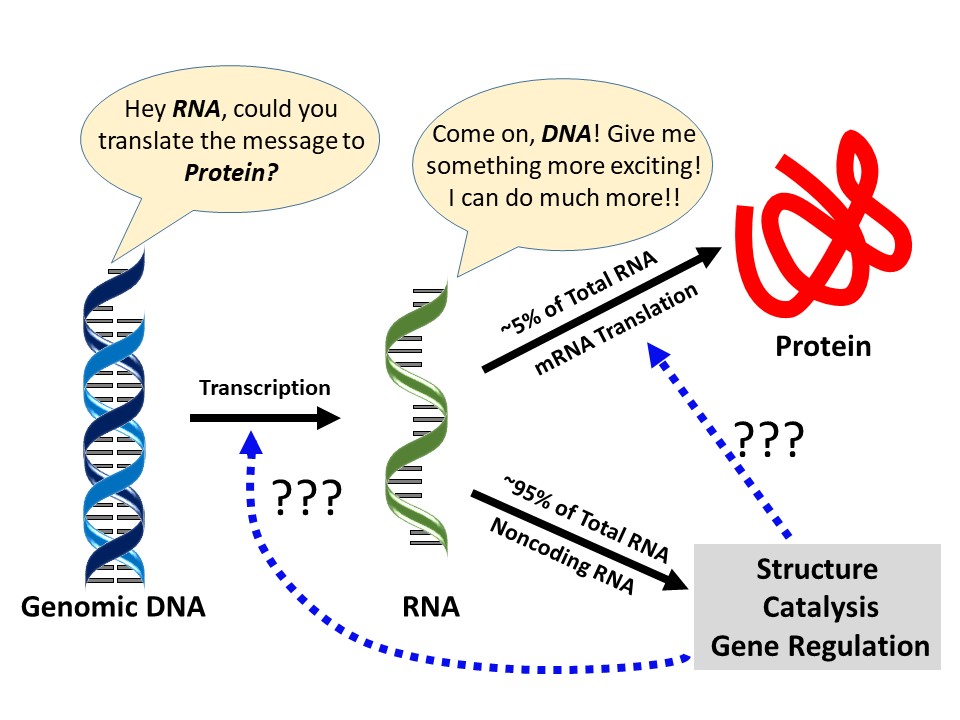
The vast majority of RNA molecules in a cells are noncoding RNAs (ncRNAs), that includes rRNAs, tRNAs, snRNAs, microRNAs, lncRNAs, and the poorly understood circular RNAs (circRNAs). CircRNA represents an important subclass of single stranded RNA molecules generated by backsplicing of the exons from precursor mRNA with a unique “Back Splice Junction” (BSJ) which distinguishes them from their linear counterparts. CircRNAs form a unique covalently closed circular loop-like structure which made them resistant to attack by exonucleases such as Ribonuclease R (RNase R). Therefore, circRNAs are comparatively more stable in nature and exhibit differential expression patterns across the evolutionary tree. Genome-wide profiling of circRNAs found that circRNAs are ubiquitously expressed and regulate gene expression by acting as a sponge for RNA Binding Proteins (RBPs) and microRNAs (miRNAs). The structure and intra/intermolecular interactions of ncRNAs critically influence every step of gene regulation, including pre-mRNA splicing, mRNA stability and translation.  However, the knowledge of circRNA interactome is limited. Our studies reported a novel technique CLiPPR-Seq to identify circRNA–mRNA interactions that can provide new insight into post-transcriptional regulations. Our findings have also established the circRNA-miRNA-mRNA regulatory axis that controls myogenesis. We continue to explore 2 major areas; (1) investigate circRNA interactome in skeletal muscle cell physiology, & (2) study the impact of circRNA interaction on pancreatic β-cell function.

Role of Circular RNA-encoded proteins

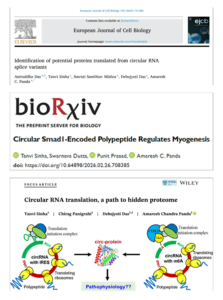
In humans ~80% of the genome is transcribed into RNA among which only 2% encodes protein. Skeletal muscle is considered as “protein hub” and contributes up to 40% of total body mass in healthy adults with high regeneration ability. Skeletal muscle is a highly-specialized tissue necessary for locomotion and energy metabolism in mammals. It is generated through a process known as myogenesis, during which multiple mononucleated myoblasts (satellite cells) are fused to form a multinucleated myofibre, the functional unit of skeletal muscle. Myogenesis is tightly regulated through precise changes in gene expression at transcriptional and post-transcriptional level. Myogenesis is regulated transcriptionally by myogenic regulatory factors (MRFs), and post-transcriptionally via RBPs, microRNAs, lncRNAs, and circular (circ)RNAs. Some recent evidence suggests that circRNA can be translated via a cap-independent, non-canonical mechanism, as it contains Open Reading Frames (ORFs), Internal Ribosome Entry Sites (IRES), and modified nucleotide sequences (m6A). We are particularly interested in discovering novel protein coding circRNAs and their functional significance during myogenesis.  One of our recent study, suggested that circSmad1 encodes a 194 aa polypeptide that regulates myogenesis. We are also trying to understand the role of other novel proteins encoded by circRNAs in muscle cells.

Specialized methods developed for studying circular RNAs

The advent of RNA-sequencing (RNA-seq) technologies and the novel computational pipelines discovered thousands of circular RNAs (circRNAs) in various organisms, including humans. Their size ranges from less than 100 nt to several thousand bases. Since the function of circRNA depends on its sequence, identification of actual spliced sequence is a crucial step for predicting their biological function.

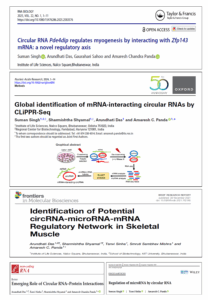
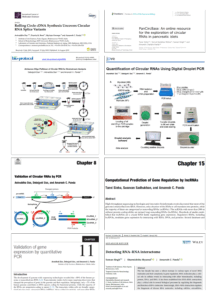
Besides exploring the molecular functions of circRNAs, we also focus on developing in silico and in vitro techniques for analysis of circRNAs. We perform bioinformatic analysis to identify and characterize circRNAs from sequencing data and validated through divergent primer designing, RNA extraction, cDNA synthesis, Sanger sequencing and pull-down experiments to accurately quantify specific circular RNA (circRNA) levels in cells. We have developed the rolling circle amplification of circRNAs to identify full-length sequences and splice variants of circRNAs. We have developed a database, PanCircBase, for the in silico analysis of circRNAs expressed in pancreatic islets. We also published a method in JOVE for the precise quantification of circRNAs using Droplet Digital PCR (ddPCR). We have also published a BioProtocol article with the detailed method to pulldown circRNAs. Recently our lab reports a novel Cross- Linking Poly(A) Pulldown RNase R Sequencing (CLiPPR-seq) technology to identify mRNA-interacting circRNAs. In addition, we have published several book chapters for analysis of circRNAs and lncRNAs. Here are some following snapshots of our publication on innovative techniques for analysis of circRNAs and lncRNAs.

From Bench to Bussiness

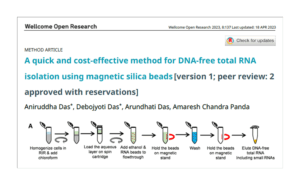
Our research is directly focused on producing high-quality, application-oriented scientific products. The quality, quantity and integrity of RNA are critical for ensuring accurate downstream gene expression analysis. It is also essential that isolated RNA must be free from nuclease contamination and properly stored. Here, we developed an optimized in-house protocol for RNA isolation using magnetic silica beads, which yields high-quality RNA without genomic DNA contamination and eliminates the need for DNase treatment. Additionally, our method purifies total RNA along with the small RNA fraction, including miRNAs, which usually require a separate kit for extraction. The isolated RNA with our method is equally suitable for mRNA and miRNA expression analysis using RT-qPCR. Overall, this in-house method of RNA isolation has exhibited comparable or better total RNA extraction compared to commercial kits at a fraction of the cost and across various cells and tissues.

This technology has been transferred to RNA Biotech Pvt Ltd for commercialisation of the MagSure All RNA Isolation Kit. RNA BIOTECH is the first Spin-off from ILS, founded by Dr. Amaresh Panda in 2021.

Publications

Details

Updated publication list can be found in GOOGLE SCHOLAR and PUBMED

* Corresponding Author Publications; # Equal Contribution

Web of Science ResearcherID: H-5459-2019

ORCiD: 0000-0003-3189-8995

Google Scholar: https://scholar.google.co.in/citations?user=cRpswPEAAAAJ&hl=en

Google Scholar Citations: 7070; h-index: 34; i10 index: 48

Research articles

  1. Singh S, Das A, Sahoo G, & Panda AC*. Circular RNA Pde4dip regulates myogenesis by interacting with Zfp143 mRNA: a novel regulatory axis. RNA Biology, 2025: 22:1, 1-11
  2. Romero B, Hoque P, Robinson KG, Lee SK, Sinha T, Panda A, Shrader MW, Parashar V, Akins RE, and Batish M. The circular RNA circNFIX regulates MEF2C expression in muscle satellite cells in spastic cerebral palsy. Journal of Biological Chemistry, 2024: p. 107987.
  3. Das P, Shyamal S, Prahaladan VM, Mishra SS, Takada X, Chandran S, Addya S, Agarwal B, Andersson S, Panda AC*, Bhandari V*. A novel circRNA–miRNA–mRNA regulatory axis as a sex-specific biological variable in bronchopulmonary dysplasia. NAR Molecular Medicine, 1(4); ugae014.
  4. Samal S, Barik D, Shyamal S, Jena S, Panda AC, and Dash M. Synergistic Interaction between Polysaccharide-Based Extracellular Matrix and Mineralized Osteoblast-Derived EVs Promotes Bone Regeneration via miRNA-mRNA Regulatory Axis. Biomacromolecules. 2024 25 (7), 4139-4155
  5. Singh S, Shyamal S, Das A, Panda AC*. Global identification of mRNA-interacting circular RNAs by CLiPPR-Seq. Nucleic Acids Research, 2024, gkae058.
  6. Das A, Sinha T, Mishra SS, Das D, Panda AC*. Identification of potential proteins translated from circular RNA splice variants. Eur J Cell Biol. 2023, 102(1):151286.
  7. Das A, Das D, Das A, Panda AC*. A quick and cost-effective method for DNA-free total RNA isolation using magnetic silica beads. Wellcome Open Res. 2023, 8:137.
  8. Das A, Das D, Panda AC*. Quantification of Circular RNAs Using Digital Droplet J. Vis. Exp.

2022, 187, e64464.

  1. Sinha T, Mishra SS, Singh S, Panda AC*. PanCircBase: An online resource for the exploration of circular RNAs in pancreatic islets. Cell Dev Biol. 2022, 10:942762.
  2. Das A, Shyamal S, Sinha T, Mishra SS, Panda AC*. Identification of potential circRNA-microRNA- mRNA regulatory network in skeletal muscle. Mol. Biosci. 2021, 8:762185.
  3. Khan S, Jha A, Panda AC, Dixit Cancer-associated circRNA-miRNA-mRNA regulatory networks: A meta-analysis. Front. Mol. Biosci. 2021, 8, 671309.
  4. Das D, Das A, Sahu M, Mishra SS; Khan S, Bejugam PR, Rout PK, Das A, Bano S, Mishra GP, Raghav SK, Dixit A, Panda AC*. Identification and Characterization of Circular Intronic RNAs Derived from Insulin Gene. J. Mol. Sci. 2020, 21(12), 4302
  5. Pandey PR; Yang JH; Tsitsipatis D; Panda AC; Noh JH; Kim KM; Munk R; Nicholson T; Hanniford D; Argibay D, et al. circSamd4 represses myogenic transcriptional activity of PUR proteins. Nucleic Acids Res 2020, 48, 3789-3805
  6. Das A; Rout PK; Gorospe M; Panda AC*. Rolling Circle cDNA Synthesis Uncovers Circular RNA Splice variants. J. Mol. Sci. 2019, 20(16), 3988
  7. Munk R; Martindale JL; Yang X; Yang JH; Grammatikakis I; Di Germanio C; Mitchell SJ; de Cabo R; Lehrmann E; Zhang Y; Becker KG; Raz V; Gorospe M*; Abdelmohsen K; Panda AC*. Loss of miR-451a enhances SPARC production during myogenesis. PLoS One. 2019; 14(3):e0214301.
  8. Pandey P; Rout PK; Das A; Gorospe M; Panda AC*. RPAD (RNase R Treatment, Polyadenylation, and Poly(A)+ RNA Depletion) Method to Isolate Highly Pure Circular RNA. 2019 Feb 15;155:41-48.
  9. Panda AC*#, De S#, Grammatikakis I, Munk R, Yang X, Piao Y. Dudekula DB, Abdelmohsen K*, and Gorospe M. High-purity circular RNA isolation method (RPAD) reveals vast collection of intronic circRNAs (IcircRNAs). Nucleic Acids Res. 2017 Jul 7; 45(12): e116.
  10. Panda AC*#, Grammatikakis I*#, Kim KM, De S, Martindale JL, Munk R, Yang X, Abdelmohsen K, and Gorospe M. Identification of Senescence-Associated Circular RNAs (SAC-RNAs) reveals senescence suppressor CircPVT1. Nucleic Acids Res. 2017 Apr 20;45(7):4021-4035.
  11. Abdelmohsen K#, Panda AC#, Munk R, Grammatikakis I, Dudekula DB, De S, Kim J, Noh JH, Kim KM, Martindale JL, and Gorospe M. Identification of HuR target circular RNAs uncovers suppression of PABPN1 translation by CircPABPN1. RNA Biology. 2017 Mar 4;14(3):361-369.
  12. Di Francesco A, Di Germanio C, Panda AC, Huynh P, Peaden R, Navas-Enamorado I, Bastian P, Lehrmann E, Diaz-Ruiz A, Ross D, Siegel D, Martindale JL, Bernier M, Gorospe M, Abdelmohsen K, de Cabo Novel RNA-binding activity of NQO1 promotes SERPINA1 mRNA translation. Free Radic Biol Med. 2016 Aug 8;99:225-233.
  13. Noh JH, Kim KM, Abdelmohsen K, Yoon JH, Panda AC, Ghosh P, Munk R, Curtis J, Moad CA, Indig FE, Paula WD, Dudekula DB, De S, Yang X, Martindale JL, de Cabo R, and Gorospe HuR and GRSF1 modulate the nuclear export and mitochondrial localization of the lncRNA RMRP. Genes Dev. 2016 May 15;30(10):1224-39.
  14. Grammatikakis I, Peisu Z, Panda AC, Kim J, Maudsley S, Abdelmohsen K, Yang X, Martindale JL, Motiño O, Hutchison ER, Mattson MP, and Gorospe M. Alternative splicing of neuronal differentiation factor TRF2 regulated by HNRNPH1/H2. Cell Reports. 2016 May 3;15(5):926-934.
  15. Panda AC*, Abdelmohsen K, Martindale JL, Di Germanio C, Yang X, Grammatikakis I, Noh JH, Zhang Y, Lehrmann E, Dudekula DB, De S, Becker KG, White EJ, Wilson GM, de Cabo R, Gorospe
  16. Novel RNA-binding activity of MYF5 enhances Ccnd1/Cyclin D1 mRNA translation during myogenesis. Nucleic Acids Res. 2016 Mar 18;44(5):2393-408.
  17. Dudekula DB#, Panda AC#, Grammatikakis I, De S, Abdelmohsen K, and Gorospe M. CircInteractome: a web tool for exploring circular RNAs and their interacting proteins and microRNAs. RNA Biology, 2016, Jan 2;13(1):34-42.
  18. Abdelmohsen K#, Panda AC#, De S#, Grammatikakis I, Kim J, Ding J, Noh JH, Kim KM, Mattison JA, de Cabo R, Gorospe M. Circular RNAs in monkey muscle: age-dependent changes. Aging (Albany NY). 2015 Nov; 7(11): 903-910.
  19. Lee KP, Shin YJ, Panda AC, Abdelmohsen K, Kim JY, Lee SM, Bahn YJ, Choi JY, Kwon ES, Baek SJ, Kim SY, Gorospe M, Kwon KS. miR-431 promotes differentiation and regeneration of old skeletal muscle by targeting Smad4. Genes Dev. 2015 Aug 1;29(15):1605-17.
  20. Abdelmohsen K, Panda AC, Kang MJ, Guo R, Kim J, Grammatikakis I, Yoon JH, Dudekula DB, Noh JH, Yang X, Martindale JL, Gorospe 7SL RNA represses p53 translation by competing with HuR. Nucleic Acids Res. 2014 Sep;42(15):10099-111.
  21. Panda AC, Sahu I, Kulkarni SD, Martindale JL, Abdelmohsen K, Vindu A, Joseph J, Gorospe M, Seshadri V. miR-196b-mediated translation regulation of mouse insulin2 via the 5’UTR. PLoS One. 2014 Jul 8;9(7):e101084.
  22. Panda AC, Abdelmohsen K, Yoon JH, Martindale JL, Yang X, Curtis J, Mercken EM, Chenette DM, Zhang Y, Schneider RJ, Becker KG, de Cabo R, Gorospe M. RNA-binding protein AUF1 promotes myogenesis by regulating MEF2C expression levels. Mol Cell Biol. 2014 Aug;34(16):3106-19.
  23. Abdelmohsen K, Panda A, Kang MJ, Xu J, Selimyan R, Yoon JH, Martindale JL, De S, Wood WH 3rd, Becker KG, Gorospe M. Senescence-associated lncRNAs: senescence-associated long noncoding RNAs. Aging Cell. 2013 Oct;12(5):890-900.
  24. Chatterjee S#, Panda AC#, Berwal SK, Sreejith RK, Ritvika C, Seshadri V, Pal JK. Vimentin is a component of a complex that binds to the 5′-UTR of human heme-regulated eIF2α kinase mRNA and regulates its translation. FEBS Lett. 2013 Mar 1;587(5):474-80.
  25. Kulkarni SD, Muralidharan B, Panda AC, Bakthavachalu B, Vindu A, Seshadri V. Glucose- stimulated translation regulation of insulin by the 5′ UTR-binding proteins. J Biol Chem. 2011 Apr 22;286(16):14146-56.
  26. Panda AC, Kulkarni SD, Muralidharan B, Bakthavachalu B, Seshadri V. Novel splice variant of mouse insulin2 mRNA: implications for insulin expression. FEBS Lett. 2010 Mar 19;584(6):1169-


Review articles and Methods

  1. Das, P., Shyamal, S., Bhandari, V., & Panda, A. C. (2026). Antisense oligonucleotide pulldown and silencing of circular RNA Nfix in vivo in neonatal mouse lungs. Current Protocols, 6, e70339. doi: 10.1002/cpz1.70339
  2. Joshi, V., Swati, Mishra, A., Panda, A. and Sharma, V. The role of circular RNAs in regulating cytokine signaling in cancer. FEBS Open Bio. 2025, 15 (9), 1436-1458
  3. Sadhukhan S, Sinha T, Dey S, & Panda AC*. Subcellular localization of circular RNAs: Where and why. Biochemical and Biophysical Research Communications, 2024, 715, 149937.
  4. Singh S, Sinha T, & Panda AC*. Regulation of microRNA by circular RNA.WIREs RNA, 2023, e1820.
  5. Singh S, Shyamal S, & Panda AC*. Detecting RNA–RNA WIREs RNA, 2022, e1715.
  6. Sinha T, Panigrahi C, Das D, Panda AC*. Circular RNA translation, a path to hidden proteome.

WIREs RNA, 2021, e1685.

  1. Das A, Sinha T, Shyamal S, Panda AC*. Emerging Role of Circular RNA–Protein Interactions. Non- Coding RNA, 2021, 7, 48.
  2. Das D, Das A, Panda AC*. Antisense Oligo Pulldown of Circular RNA for Downstream Analysis. Bio Protocol. 2021 Jul 20; 11(14): e4088.
  3. Bejugam PR, Das A, Panda AC*. Seeing Is Believing: Visualizing Circular RNAs. Noncoding RNA

2020, 6 (4).

  1. Das A, Das A, Das D, Abdelmohsen K, Panda AC*. Circular RNAs in Biochim Biophys Acta Gene Regul Mech 2020, 1863 (4), 194372.
  2. Das D, Das A, Panda AC*. Emerging role of long noncoding RNAs and circular RNAs in pancreatic β cells. Non-coding RNA Investigation. 2018;2:69
  3. Panda AC* and Gorospe Detection and Analysis of Circular RNAs by RT-PCR. Bio-protocol.

2018 Mar 20; 8(6): e2775.

  1. Panda AC, Grammatikakis I, Munk R, Gorospe M, Abdelmohsen Emerging roles and context of circular RNAs. Wiley Interdiscip Rev RNA. 2017 Mar: 8(2).
  2. Panda AC*, Martindale JL, Gorospe M. Polysome Fractionation to Analyze mRNA Distribution Profiles. Bio-Protocol. 2017 Feb 5, Vol 7, Iss 03.
  3. Panda AC*, Martindale JL, Gorospe M. Affinity Pulldown of Biotinylated RNA for Detection of Protein-RNA Complexes. Bio-Protocol. 2016 Dec 20, Vol 6, Iss 24.
  4. Grammatikakis I#, Panda AC#, Abdelmohsen K, Gorospe Long noncoding RNAs (lncRNAs) and the molecular hallmarks of aging. Aging (Albany NY). 2014 Dec ;6(12) :992-1009.
  5. Panda AC, Grammatikakis I, Yoon JH, Abdelmohsen K. Posttranscriptional regulation of insulin family ligands and receptors. Int J Mol Sci. 2013 Sep 18;14(9):19202-29.

Book chapters

  1. Sinha, T., Sadhukhan, S., Panda, A.C. (2025). Computational Prediction of Gene Regulation by lncRNAs. In: Lai, X., Gupta, S., Vera Gonzalez, J. (eds) Computational Biology of Non-Coding RNA. Methods in Molecular Biology, vol 2883. Humana, New York, NY. https://doi.org/10.1007/978-1-0716-4290-0_15
  2. Singh, S., Das, A., Panda, A.C. (2024). Sanger Sequencing to Determine the Full-Length Sequence of Circular RNAs. In: Dieterich, C., Baudet, ML. (eds) Circular RNAs. Methods in Molecular Biology, vol 2765. Humana, New York, NY. https://doi.org/10.1007/978-1-0716-3678-7_5
  3. Sinha T, Shyamal S, Panda AC*. Computational Tools for Functional Analysis of Circular RNAs. RNA Structure and Function. RNA Technologies, Springer, Cham. 2023, vol 14.
  4. Das A, Das D, Panda AC*. Chapter 11 – Validation of gene expression by quantitative PCR. Translational and Applied Genomics, Rigor and Reproducibility in Genetics and Genomics, Academic Press, 2024, Pages 247-257.
  5. Das A, Das, D, Panda AC*. Validation of Circular RNAs by PCR. Methods Mol Biol, 2022, 2392, 103-114.
  6. Panda AC*. Circular RNAs Act as miRNA Sponges. Adv Exp Med 2018; 1087:67-79.
  7. Panda AC, Dudekula DB, Abdelmohsen K, Gorospe M. Analysis of Circular RNAs Using the Web Tool CircInteractome. Methods in Molecular Biology, vol 1724; 2018 Jan 11.
  8. Panda AC, Abdelmohsen K, and Gorospe M. SASP Regulation by Noncoding RNA. Mechanism of Aging and Development. 2017 Dec;168:37-43.
  9. Munk R, Panda AC, Grammatikakis I, Gorospe M and Abdelmohsen K. Senescence-associated miRNAs. International Review of Cell and Molecular Biology. 2017;334:177-205.
  10. Panda AC, Abdelmohsen K, Gorospe RT-qPCR detection of senescence-associated circular RNAs. Methods in Molecular Biology. 2017; 1534:79-87.

Editorials and Commentaries

  1. Sinha T, Abdelmohsen K, Panda AC*. Editorial: Volume II: Structural and functional characterization of circular RNAs. Mol. Biosci. 2022, 9:1015990.
  2. Grammatikakis I, Karreth FA, Panda AC*. (2021) Editorial: Structural and Functional Characterization of Circular RNAs. Mol. Biosci. 2021, 8:795286.
  3. Das A, Gorospe M, Panda AC*. The coding potential of circRNAs. Aging (Albany NY). 2018 Sep 13; 10(9):2228-2229.
  4. Panda AC* and Gorospe M. Identifying intronic circRNAs: progress and challenges. Non-coding RNA Investig 2018; 2:34.
Other publications
  1. Panda AC and Seshadri V. Mus musculus insulin2 precursor (Ins2) mRNA, partial cds, alternatively spliced. Gene Bank # GQ915612.1.

Group

Details
1738816974945_edited_edited_edited.png Komal Kumari, Graduate Student, JRF (Feb 2025-Present)
DSC_1672.JPG Dishanee Santra, Graduate Student, JRF (Feb 2025-Present)
1714126711066.jpeg Swarnava Dutta, Graduate Student, JRF (April 2024-Present)
IMG_20240317_120351.jpg Gaurahari Sahoo, Graduate Student, JRF (April 2024-Present)
IMG_20240304_184903.jpg Susovan Sadhukhan, Graduate Student, SRF (May 2023-Present)
1717568812298.jpg Tanvi Sinha,  Graduate Student, SRF (Feb 2021-Present)
Pranita Kumari Rout, Laboratory Technician (Mar 2018 – Present)
Dr. Suman Singh, PhD AWARDED from RCB, Faridabad (March 2021-March 2025)
PKL_5039.JPG Dr. Debojyoti Das,  PhD AWARDED from KIIT University (Aug 2018- May 2023)
DSC_1657_edited.jpg Dr. Arundhati Das, PhD AWARDED from KIIT University (July 2018-Feb 2024)
Dr. Aniruddha Das,  PhD AWARDED from KIIT University (Apr 2018-Jan 2023)
1000044604.jpg Preeti Mohapatra, Project JRF (May 2025- present)

Alumni

Dr. Suchanda Dey; Project SRF (Sept 2023 – August 2024)
Dr. Sharmishtha Shyamal; Research Associate II (Nov 2023 – Nov 2024)

Dr. Pruthvi Raj Bejugam, PhD; Postdoctoral Research Associate (Nov 2019 – Oct 2020)

Dr. Mousumi Sahu. PhD; Postdoctoral Research Associate (Dec 2018 – May 2019)

Dishanee Santra; Project JRF (March 2024 – January 2025)
Udit Narayan Padhi; Project JRF (Sept 2023 – March 2024)
Komal Pati; Summer Intern ( June 2022 – July 2022)
Smruti Sambhav Mishra; Project Associate II (October 2019 – March 2022)
Tanmaya Behera; Project JRF (April 2021 – March 2022)
Chirag Panigrahi; Masters Dissertation (Jan 2021-Jul 2021)
Tanvi Sinha; Project JRF (Dec 2019 – Feb 2021)
Nandita Panigrahi; Summer Intern (May 2018 – Jul 2018)

Grants

Details

Current Extramural Grants

Title: “Exploring the protein-coding functions of circular RNAs in skeletal muscle cell differentiation

Science and Engineering Research Board (SERB): CRG!2022/001999

Dates: 20/06/2023 – 19/06/2026

Total Project Cost: ₹ 56,91,859


Completed Fellowships/ Grants

Funding Source Project Title Start-End Date Total Cost ()
The Wellcome Trust/DBT India Alliance, Intermediate Fellowship Analysis of the impact of mRNA-mRNA/circRNA interactions in pancreatic β-cell physiology Sep 2019 – Aug 2024 3,52,60,951
Department of Biotechnology (DBT), Government of India Role of Subcellular Localization of Circular RNAs in Muscle Cell Differentiation Apr 2019 – Mar 2022 62,13,088
Science and Engineering Research Board, DST, Government of India, Ramanujan Fellowship RNA hybrids regulating post-transcriptional gene expression in muscle physiology and pathology Oct 2017 – Aug 2019 50,80,000


Contacts

EmailAddressFaxOffice
amaresh.panda@ils.res.inInstitute of Life Sciences, Nalco Square, Bhubaneswar-751023, India0091 674 2300728+91 674 230 4314

Highlights

Details

Our lab research has significantly advanced the understanding of circular RNAs and post-transcriptional gene regulation, particularly in muscle regeneration and pancreatic beta-cell physiology. As a Scientist at the Institute of Life Sciences (ILS), Bhubaneswar, our lab has published 30+ articles in journals such as Nucleic Acids Research, EJCB, and RNA Biology, with over 7,000 citations and an h-index of 34, placing me among the top 2% of scientists globally for multiple years. Our research has uncovered novel molecular mechanisms that influence human health and disease, contributing both to fundamental biology and translational insights.

Beyond academia, my lab has demonstrated strong translational leadership by developing affordable molecular biology kits, including a magnetic bead-based RNA isolation kit to improve access in resource-limited settings. I am also the founder of RNA Biotech Pvt. Ltd., an emerging startup focused on creating indigenous RNA-based kits and tools aligned with the Make in India vision. Through this initiative, our lab is bridging the gap between scientific discovery and real-world application, enabling broader participation in biotechnology research and innovation in India.

Positions

Details

To investigate post-transcriptional gene regulation in muscle regeneration, we employ various approaches including high-throughput screening, computational tools, proteomics, molecular, and cell biology methodologies. We have been developing new technologies to isolate, identify and understand the role of post-transcriptional regulators in muscle regeneration. These studies may potentially provide new opportunities for development of therapies for muscle diseases.

Prospective Ph.D. students interested in our lab may refer to the Ph.D. Programme advertisement on ILS website.

If you are interested in a summer dissertation, please refer to https://www.ils.res.in/advertisements/

Our lab is looking for a postdoctoral candidate with bioinformatics background who either have a postdoctoral fellowship or willing to apply through NPDF (SERB).

For more information please contact me at amaresh.panda@ils.res.in