Academics
| Degree | University/Institution |
|---|---|
| B.V.Sc. & A.H. | College of Veterinary Science and Animal Husbandry, OUAT, Odisha, India |
| Ph.D. | Department of Biochemistry and Molecular Biology, University of Nebraska Medical Center, USA |
Work Experience
| Position | University/Organisation | Period |
|---|---|---|
| Scientist-F | Institute of Life Sciences, Bhubaneswar | Since January 2024 |
| Scientist-E | Institute of Life Sciences, Bhubaneswar | 2019-2023 |
| Scientist-D | Institute of Life Sciences, Bhubaneswar | 2015-2018 |
| Ramalingaswami Fellow Scientist | Institute of Life Sciences, Bhubaneswar | 2012-2015 |
| Postdoctoral Researcher | Ohio State University, Comprehensive cancer center, Columbus, Ohio, USA | 2010-2012 |
| Research Assistant | University of Nebraska Medical Center, Omaha, NE, USA | 2005-2010 |
| Junior Veterinary Officer | Government Hospital, Kandhamala, Orissa, India | 2003- 2005 |
| Veterinary Extension Officer | Heifer Project International, Bhubaneswar, India | 2002-2003 |
Awards & Recognition
| Details |
|---|
|
Research
| Details |
|---|
Our lab focuses on understanding the tumor microenvironment (TME) of pancreatic and prostate cancers, with emphasis on immune regulation, stromal interactions, and infection-driven inflammation. We develop and use clinically relevant animal models and patient-derived samples to explore mechanisms of cancer progression and identify novel therapeutic strategies, including drug repurposing and immunomodulation. In parallel, we investigate the roles of probiotics and the microbiota in health and disease, advancing indigenous and marine probiotic strains as potential bio-therapeutics. Our expertise in animal models also enabled critical contributions to COVID-19 research and therapeutic development. Understanding and targeting the pancreatic cancer tumor microenvironment One of the major focuses of the lab is to elucidate the cellular and molecular intricacies of the Pancreatic Ductal Adenocarcinoma (PDAC) tumor microenvironment (TME) and to evaluate potential TME-targeting therapies using clinically relevant animal models and human patient-derived cells and/or tissue samples. Immune-competent animal models are potential tools for TME-related studies. In this regard our lab has characterised and used a hamster pancreatic cancer cell line (HapT1) -derived syngeneic PC tumor model (Oncotarget, 2016). The findings of this study motivated us to investigate the role of macrophage migration inhibitory factor (MIF) in PDAC. The findings of our study showed the pro-tumorigenic role of MIF expressed by both cancer cells and cancer associated fibroblasts (CAFs) (Scientific reports 2019; FASEB J., 2022). Recently, our lab has also established well-characterized multiple syngeneic mouse pancreatic cancer cell lines derived from genetically modified mouse models. These cell line-derived animal models are helping us address multiple questions about TME and its targeted therapy. Our lab has a significant interest in identifying immunomodulators, and in this regard, we are exploring novel approaches using existing drugs and/or novel drug candidates that could be useful as therapeutic agents. One of our studies showed that gemcitabine induces polarization of mouse peritoneal macrophages toward an M1-like phenotype, with antitumor effects via reactive oxygen species production (Clin Exp Metastasis, 2022). Further, we reported that statins counteract gemcitabine-induced PD-L1 expression in pancreatic cancer-associated fibroblasts and cancer cells, thereby improving cancer therapeutic outcomes (Cancer Immunol Immunother, 2023). Our efforts on drug repurposing revealed that Fluvastatin can be used as radio sensitizer to suppress tumor-associated fibrosis (Lab Invest, 2021). One of our lab’s interests was to investigate the roles of the cancer-testis antigens MAGEA3 and ATAD2 in PDAC. Our study found that MAGEA3 overexpression in pancreatic cancer cells confers a survival advantage (J Exp Clin Cancer Res, 2019). Through collaborative studies, we also found that MicroRNA-217 modulates pancreatic cancer progression via targeting ATAD2 (Life Sciences, 2022). These findings have provided a rationale for the design of novel therapeutics against PDAC. Currently, we are conducting two major studies to elucidate the heterogeneity of PDAC-associated CAFs and to understand the role of different CAF subpopulations in immunomodulation. Investigating bacteria and their derived products on cancer pathogenesis and response to therapy Our lab is interested in understanding and targeting inflammation and/or infection-mediated events in prostate and pancreatic cancers. Like many other cancers, prostate cancer patients are susceptible to various infections. Our work demonstrated that TLR4 activation by lipopolysaccharide confers a survival advantage to growth factor-deprived prostate cancer cells, emphasizing the critical role of inflammation and innate immune signalling in cancer cell survival (Prostate, 2015). Another study revealed that lipopolysaccharide (LPS) enhances prostate cancer metastasis potentially through NF-κB activation, further highlighting the link between infection-driven inflammation and cancer progression (Prostate, 2018). Further, our study found that Escherichia coli is commonly present in benign prostate hyperplasia-associated microbiota, which induces inflammation and DNA damage in prostate epithelial cells, linking infection to cancer development (Prostate, 2020). Currently, we are investigating the role of bacteria and their derived products in the cancer TME, specifically in immune cells, and their consequences on the response to various therapeutics. Isolation, characterisation and use of probiotics for animal/human health and diseases Apart from cancer biology, our lab has emerged as a key contributor in investigating the role of indigenous probiotics in human health, disease prevention, and therapy. We initially participated in the ILS flagship project on Tribal Health and Nutrition, funded by DBT, where our group isolated potential probiotic strains from tribal stool samples and traditional fermented beverages. This work led to the comprehensive characterization of promising indigenous probiotic strains, including Ligilactobacillus salivarius F14, Lactiplantibacillus plantarum ILSF15, and Levilactobacillus brevis ILSH3, highlighting their potential as novel biotherapeutics (World J Microbiol Biotechnol., 2023; Gene, 2024; Probiotics Antimicrob Proteins, 2024). Investigation of these strains provided critical insights into the genomic basis of probiotic function, safety, and their adaptability to human gut environments while also demonstrating their antimicrobial, anti-cholesterol, and immunomodulatory properties. Our ongoing research is evaluating the preventive and/or therapeutic potential of these strains in models of non-alcoholic fatty liver disease and pancreatic cancer (Cell Mol Gastroenterol Hepatol, 2025). Our lab is also an active participant in the multi-institutional Himalayan Bio-mission Project, funded by DBT. In this project, our group is conducting a toxicological assessment of functional food formulations developed using characterized indigenous strains to ensure their safety and regulatory readiness for nutraceutical applications. Recently, our lab has been actively involved in a new institutional initiative for Marine Bioprospecting under the Deep Ocean Mission (supported by MoES), where we aim to isolate novel probiotic candidates from marine ecosystems for use in functional foods, biotherapeutics, aquaculture, and environmental bioremediation. COVID-19 research and animal models With our prior expertise in developing clinically relevant animal models, our group played a pivotal role during the COVID-19 pandemic. Supported by BIRAC funding, we established the BRIC-ILS ABSL-3 animal challenge platform for SARS-CoV-2 research, making our institute one of the few national facilities capable of developing and utilizing such models at a critical time. This platform not only enabled essential COVID-19 studies but also served multiple government and private organizations in a fee-for-service mode. Our research contributed to understanding SARS-CoV-2 biology, transmission, and pathogenesis (FASEB J., 2021; Eur J Pharmacol., 2023; Indian Patent: 202231071195). Building on this foundation, we are now engaged in identifying and validating potential drug candidates for COVID-19-associated lung fibrosis, leveraging both in vitro and in vivo models. |
Publications
| Details |
|---|
Publications from ILS, Bhubaneswar Original research articles
Patents Senapati S, Mohapatra AP, Parida D : Design and use of disposable animal isolator for in vivo imaging of small animals in micro CT systems placed inside bio-containment facility (Indian Patent Number: 583796; Granted) Reviews and Book Chapters
|
Group
| Details | |||||||||
|---|---|---|---|---|---|---|---|---|---|
| |||||||||
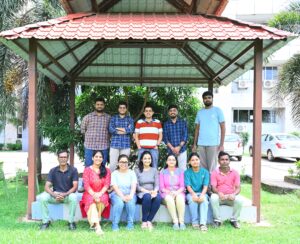
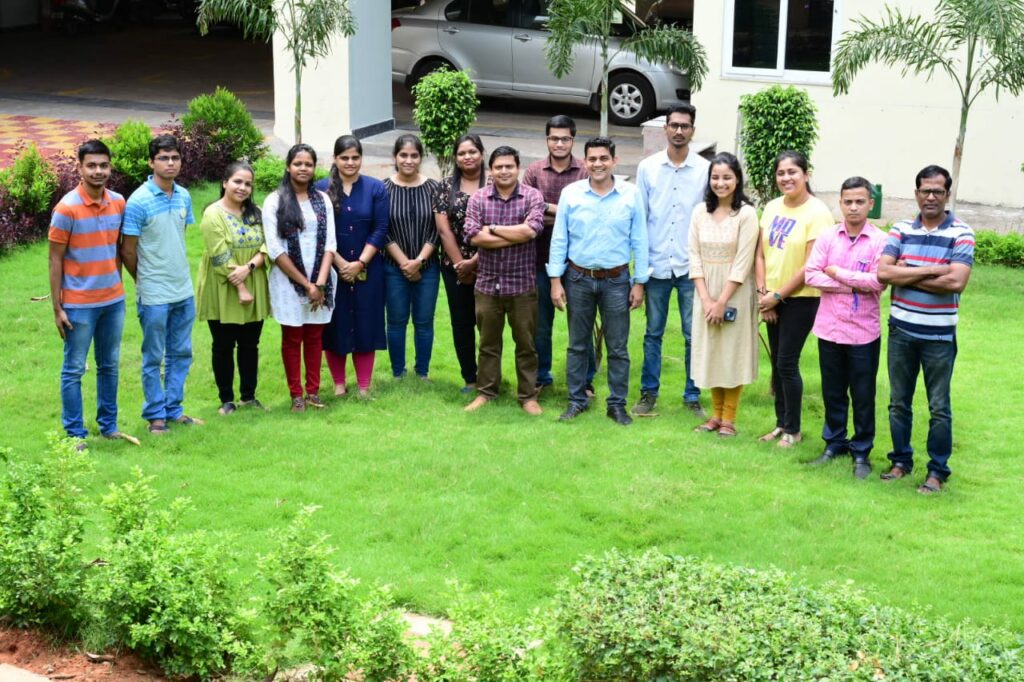
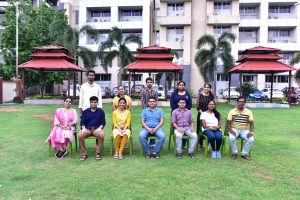
Grants
| Details | |||||||||||||||||||||
|---|---|---|---|---|---|---|---|---|---|---|---|---|---|---|---|---|---|---|---|---|---|
Extramural funding
|
Contacts
| Address | Fax | Office | |
|---|---|---|---|
| senapati@ils.res.in | Nalco Square, Bhubaneswar-751023, India | 0091 674 2301460 |